

Out-of-Home Ads
Out-of-Home
We build Christchurch websites that load fast, are easy for your team to edit, and connect to the systems you already run — Xero, your CRM, your booking tool, your stock list. Fixed quote before we write a line of code.
Quick Answer
Kiwitech Labs handles web development for Christchurch and Canterbury businesses from our studio at G04 428 Dominion Road, Mt Eden, Auckland. We do not keep an office in Christchurch and will not pretend otherwise — Canterbury projects run remotely on a staging link you can see from day one, with travel quoted openly when a site visit or photography genuinely needs someone there. Most Christchurch businesses that call us do not need a new website so much as a new engine under the one they have: a site built five or six years ago on a page builder, now slow on mobile, awkward to edit, and quietly disconnected from the quoting or booking system the business actually runs on. Development work starts with figuring out which of those problems is costing you money. Sometimes the answer is a rebuild. Sometimes it is a stack swap, a hosting move and a fortnight of integration work instead. We tell you which before you commit, because a rebuild you did not need is the most expensive thing we could sell you.
Years in NZ
In Business Since
Team
Based In
Web development services in Christchurch
For teams that publish regularly — custom themes and a structured content model so staff can add a project, product or job listing without breaking the layout or calling a developer.
Quote calculators, product configurators, member portals and sites pulling live data from an ERP — where custom logic and speed matter more than editing convenience.
Xero and MYOB, HubSpot, Pipedrive or Salesforce, booking tools, inventory systems, Stripe and Windcave payments. Built against sandbox accounts before anything touches live data.
Platform moves and rebuilds with every old URL that has traffic or backlinks mapped to a destination, tracking verified before switchover and Search Console watched daily for a fortnight after.
Updates, backups, uptime monitoring and security patching on a flat monthly plan — or take the repository and run it yourself with our documentation. No lock-in either way.
Selected Work
Out-of-Home Ads
Out-of-Home

Outdoor Campaign
Outdoor Campaign

Brand Identity
Brand System
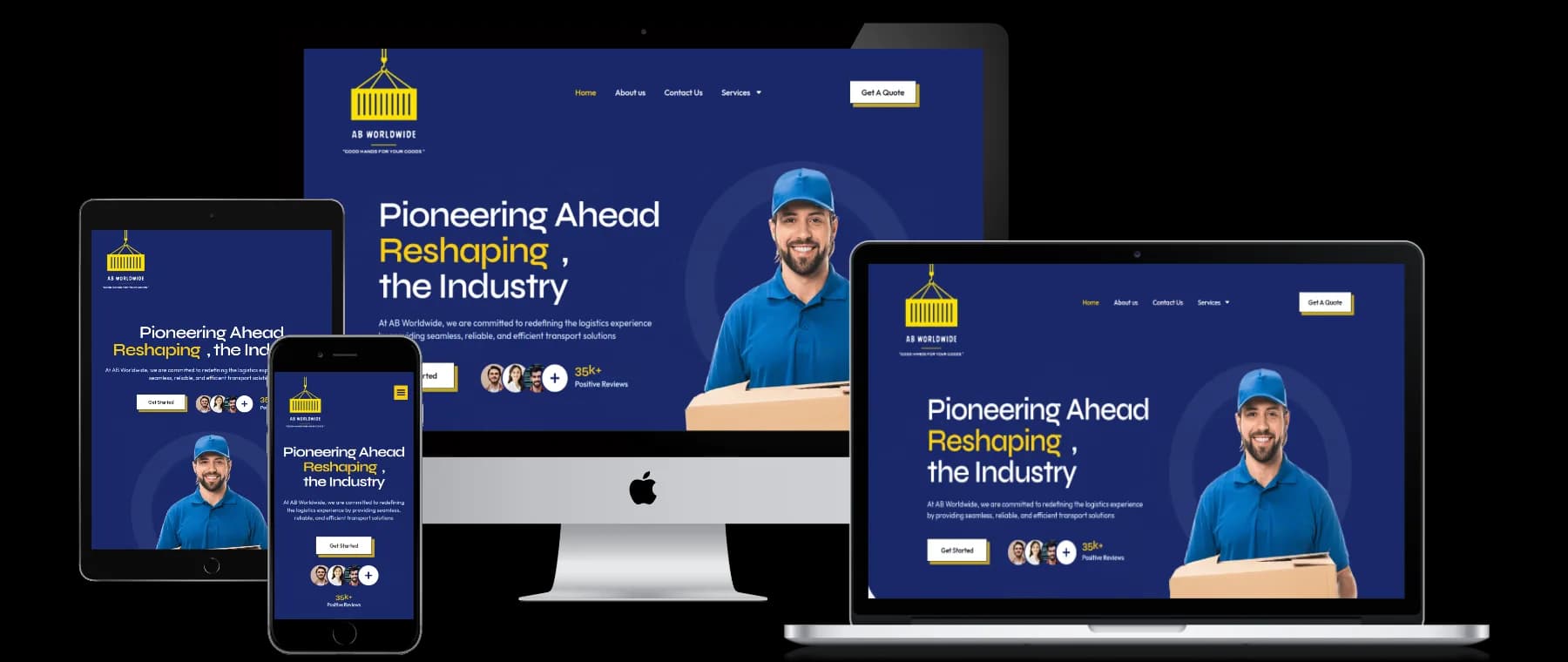
Web Development
Multi-Device Web

Guerilla Marketing
Guerilla Concept

UX / UI Design
PropTech App

Social & Creative
Fitness Creative

Packaging Design
Packaging Design

Mobile UX
Smart Home App

Print Advertising
Print Advertising

Discovery comes first and it is paid, because it produces something you can keep. Over a week we audit the current site, list every system the new one has to talk to, pull your Search Console and analytics data to see which existing pages earn traffic, and write an architecture document: platform recommendation with reasoning, sitemap, content model, integration map, hosting plan, and a fixed price. If you decide to build it elsewhere with that document, that is a legitimate outcome and you have paid for the thinking, not for a pitch.
Build runs in two-week sprints on a staging URL you can see from day one. Templates go up before content so structure problems surface early. Integrations are built against test accounts first, never live data. Everything goes through code review and lands in a Git repository you own. You get an editing walkthrough on staging while the build is still moving, which is the point at which people usually discover the content model needs one more field — cheap to change then, expensive after launch.
Launch is the part people underestimate. We map redirects from every old URL that has traffic or backlinks, migrate DNS with lowered TTLs so a rollback is possible, verify analytics and conversion tracking fire correctly, resubmit the sitemap, and watch Search Console daily for the first fortnight. Traffic dips after a migration are almost always redirect mistakes, and almost always fixable inside a week if someone is actually looking.

Christchurch is not a smaller Auckland. The commercial base leans heavily on construction and the long tail of the CBD rebuild, on manufacturing and engineering across the industrial belt, on agriculture and agritech through Lincoln and the wider Canterbury plains, and on a real export software sector. Those are considered-purchase businesses. Nobody buys a structural steel package or an irrigation system off a homepage. The site's job is to survive a long evaluation: technical detail that stands up to scrutiny, capability evidence, specification documents, and a contact path that reaches a human who knows the answer.
That shapes the engineering. Canterbury sites tend to need document libraries, spec sheets and downloadable drawings served fast; project or case galleries with enough structure to filter by sector; and forms built for site conditions, meaning large photo uploads that do not fail on a rural connection and do not silently drop when a truck driver fills them in on a phone at a yard in Hornby. We test on throttled mobile connections because a meaningful share of your traffic is not sitting at a desk.
Local specifics matter too. Suburb-level pages for Riccarton, Addington, Papanui, Hornby and Lincoln only earn their place if each one carries genuinely different content — different jobs, different context, different photos. Ten near-identical suburb pages are a liability, not an asset. And because Canterbury service businesses often cover a wide area, we build service-area logic into the site rather than pretending there is a storefront on every corner.
Why Choose Us
Hiring web developers is mostly a bet on how they handle the decisions you cannot audit yourself, so we make the biggest one early and in writing. WordPress suits businesses whose staff publish regularly — service pages, project galleries, news, job listings — and who want to change copy without a developer. Shopify suits anyone selling physical product, because payments, shipping rules, GST handling and stock sync are already solved and maintained by someone else. Next.js suits builds where speed and custom logic matter more than editing convenience: quote calculators, product configurators, member portals, sites pulling live data from an ERP. Each is right for someone and none is right for everyone, so the recommendation comes with the trade-offs written down where you can disagree with them. Every project ships to a Git repository you own, with the code, the hosting and every credential in your name.
WordPress, Shopify or Next.js, chosen against your editing habits, your integrations and your budget — with the trade-offs written down so you can disagree with us.
Xero and MYOB, HubSpot, Pipedrive or Salesforce, booking tools, inventory systems, Stripe and Windcave payments. Built against test accounts before they touch live data.
Structured fields rather than one big text box, so staff can add a project, a product or a job listing without breaking the layout or calling us.
Modern image formats, code splitting, sensible caching and a hosting setup sized to your traffic. Tested on throttled mobile, not just office fibre.
Every old URL with traffic or links gets a mapped redirect. Analytics and conversion tracking verified before switchover, monitored daily for two weeks after.
Updates, backups, uptime monitoring and security patching on a flat monthly plan — or take the repository and run it yourself. No lock-in either way.
Industries
Kiwitech works with Christchurch and wider New Zealand businesses across 25+ industries, but four verticals dominate our roster: property, education, healthcare, and food and beverage. SaaS, D2C retail, e-commerce, and industrial manufacturers round out the next tier of growing accounts.
02/Awards & partnerships

Top GenAI Company
Clutch · 2026 leader
Google Ads
Search, Shopping & Performance Max

Top Clutch · App Dev
Verified industry leader
Microsoft
Advertising & cloud
Shopify
Commerce builds
WordPress
CMS & enterprise web
ChatGPT
AI workflow partner
Gemini
Google AI partner
Google Cloud
Infra & data
Bing Ads
Microsoft advertising
Our Process
A 5-step playbook we run with every Christchurch client. Same rigour for a single-location SMB and a multi-brand enterprise pod — only the depth changes.
One week. Audit of the current site, integration inventory, analytics review, architecture document, sitemap, content model and a fixed price.
Repository, staging environment, deployment pipeline, base templates and content model. You get a staging link in week one.
Two-week sprints with a review at the end of each. Integrations built against test accounts. Code review on every change.
Cross-browser and mobile testing, accessibility pass, form and payment testing end to end, plus a recorded training session for your editors.
Redirects mapped, DNS migrated, tracking verified, sitemap resubmitted. Daily Search Console checks for a fortnight, then monthly maintenance if you want it.

If you are shopping for a web developer in Christchurch, ask what the site has to talk to before you ask what it will look like. Almost every Christchurch build carries one integration that makes it genuinely useful rather than merely presentable, and that integration is where the engineering hours and the risk both sit. For a Riccarton or Papanui retailer it might be click-and-collect stock visibility. For an Addington trades business it is a quote request form landing in the CRM with job type, suburb and photo attachments already sorted. For a Canterbury manufacturer it is a product catalogue fed from an existing inventory database instead of maintained twice by hand. For an agritech firm around Lincoln it is often a gated technical-document library with proper access control. A developer who quotes on page count without asking about any of that has not priced the actual job.
Then ask what happens on the day you leave. The code should live in a Git repository in your name, the hosting account and domain should be registered to you, and every third-party credential should be yours rather than held in an agency password vault. Ask to see the staging environment during the build rather than at the end, ask whether integrations are tested against sandbox accounts before they touch live data, and ask who maps the redirects at launch — traffic drops after a migration are almost always redirect mistakes, and almost always fixable inside a week if somebody is actually watching Search Console. We answer all of that the same way for every client, and none of it depends on where the developer sits.
Cost sorts into a predictable order and it is worth knowing that order before you compare quotes. A straightforward brochure or service site on WordPress is the cheapest. A larger site with custom templates, a proper content model and one or two integrations costs meaningfully more, with the integrations rather than the page count doing most of the moving. A well-configured standard Shopify store sits between the two and climbs sharply once you need custom logic or a headless front end. Next.js builds with bespoke functionality are the most expensive, because everything is written rather than configured. Hosting and maintenance are a separate monthly plan that scales with your stack and traffic. Discovery is quoted on its own, the build price is fixed after it, and a quote that arrives without a discovery is a guess someone will reprice later.
FAQ
Platform, template count and integrations decide it, in that order. A standard WordPress brochure or service site is the cheapest build. Larger WordPress sites with custom templates and one or two integrations cost meaningfully more, and it is the integrations that move the number rather than the extra pages. A well-configured Shopify store sits between the two, rising sharply for custom logic or headless work. Next.js builds with bespoke functionality are the most expensive, because everything is written rather than configured. Discovery is quoted separately and the build price is fixed after it.
It is a flat monthly plan with two tiers. The standard plan covers a WordPress or Shopify site — hosting, updates, backups, uptime monitoring and a small allowance for content edits. The higher tier is for larger sites and Next.js builds with integrations that need watching, where a failed third-party call matters more than a plugin update does. You can also take the repository and host it yourself; we will document the setup either way.
WordPress if your team publishes regularly and wants to edit without a developer. Shopify if you sell physical product, because payments, shipping, GST and stock are already solved. Next.js if you need custom logic, unusual speed, or a front end pulling live data from another system. We make the call in discovery and write down why. The design half of the project — user experience, information architecture, brand expression — is covered on our Christchurch web design page, and the two usually run together.
A standard site is six to eight weeks from discovery to launch. Larger builds with integrations run ten to sixteen weeks. The variable is almost never our engineering — it is content and third-party access. Projects that stall usually stall waiting on copy, photography, or API credentials from another vendor.
No, and we would rather tell you that than list an address we do not occupy. Our studio is at G04 428 Dominion Road, Mt Eden, Auckland, and Canterbury clients are delivered remotely — video calls, a shared staging link from week one, and a project board you can open at any time. In practice that is how most web development runs now regardless of where the developer sits, because the work happens in a repository and a browser rather than in a room. If a project genuinely needs someone on the ground for a site visit or photography, we arrange it and quote the travel openly rather than burying it in the build price.
Compare on the three things that actually differ. First, does the quote follow a discovery, or is it a number produced before anyone listed the systems the site has to talk to? Second, who owns the output — the repository, the hosting account, the domain, the third-party credentials should all be in your name, and any hesitation there is the answer. Third, ask how they handle launch: mapped redirects for every old URL with traffic or links, tracking verified before switchover, and someone watching Search Console daily for the first fortnight. Portfolios all look similar; those three answers do not.
Often, yes, and we will say so. If the underlying build is sound, a performance pass, a hosting move and some integration work can cost a quarter of a rebuild and get most of the benefit. We recommend a rebuild when the platform is unsupported, the content model cannot express what you sell, or the accumulated plugin debt makes every change risky.
Get a Quote
Tell us about your goals — we'll reply within one New Zealand business day with next steps.
Tell us where Web Development sits for you today and what you need it to do. We'll come back with what we would change first, in what order, and what that involves.

Talk to a strategist
Free 30-minute call. No obligations. Just answers.